Showing posts with label Book Review. Show all posts

Tuesday, December 10, 2013

House of Leaves - Book Review

Trying to review this book in full is a difficult task. House of Leaves is no ordinary book. There are so many layers to this piece of fiction (it is fiction, right?) that trying to dissect them all would keep me here for the rest of the month. The only thing I can do is try to sum up my experience with House of Leaves, one of the most unique - and ultimately terrifying - books I have ever read. 

After peeling back the layers enfolding House of Leaves, you find that the core of the book is about a house, the house on Ash Tree Lane. A photographer named Will Navidson moved into this house and set up cameras all over the place to try and do a documentary about his new life with his girlfriend, Karen, and his two children, Daisy and Chad. Soon after moving into the home, Navidson stumbles upon a terrifying reality - his house is bigger on the inside than the outside. What begins as less than an inch of extra space found within the house, quickly turns into an ever-growing interior that in no way matches its outside visage. Once the house has expanded within, a mysterious hallway is discovered by the children – an ever-evolving hallway that is at one time ten feet long, and at another, a dark hundred. As Navidson begins to investigate this strange anomaly, he finds that where the hallway should appear in the yard outside, it does not. This particularly horrifying and uncanny part of the documentary is titled "The Five and a Half Minute Hallway."

The book then proceeds to detail the expeditions Navidson – and other characters – embark on to find out what is in this hallway and why the house has this uncanny spacial anomaly, all while dealing with the effects this terrifying intrusion has on the Navidson clan. The fascinating thing about this book is the antagonist - the house. This isn't just a normal haunted house, this is a monstrous enigma that shakes the Navidson family - and those who attempt to help the Navidson family - to their core. Once one enters the dark hallway, they are subject to the house's somewhat demonic nature. Light does not exist inside the corridors of this other realm, neither do adornments, such as furniture, decorations, or even floor molding at the bottom of the walls. Within this strange abyss, one is met with a constantly shifting maze of blind corridors, doors that lead to infinity, and a constant growling of a creature - possibly the house itself - hiding in the dark, a presence that reminds me of Gmork from The Neverending Story (the film version).

While that is the core of House of Leaves, what falls under the most speculation throughout the book is the entirety of Navidson's video documentary. Titled, "The Navidson Record", the video documentary of the terror that greets the family in the house on Ash Tree Lane eventually goes public and viral, and many critics begin to either praise it for its powerful artistic nuances, or criticize Navidson for creating an elaborate - and yet seemingly impossible - hoax. This public reception causes a man by the name of Zampano to try and prove or disprove the Navidson Record by interviewing the survivors of the ordeal, researching the house and the history of the house, and pouring over hours and hours of video footage of the "Five and a Half Minute Hallway."

The book actually opens up with Zampano's death under mysterious and questionable circumstances. Johnny Truant, a friend of one of Zampano’s neighbors, comes across all of Zampano’s research and findings on the Navidson Record and decides to pick up Zampano's mantle and find out what all the hooplah surrounding the Navidson Record is, adding his own experiences – and questionable life story – to the already complex layer of narrative.

The most unique thing about House of Leaves is the format of the book itself. As your own journey into the hallway in the house at Ash Tree Lane progresses, the formatting of the book becomes weirder and weirder, forcing the reader to experience a dose of claustrophobia, emptiness, or confusion, much like what the characters in the book experience. Text spirals as you descend a dark staircase, nearly blank pages with single words gives you the feeling of loneliness, and to add to the confusion, almost every page is filled with footnotes with Johnny's, Zampano's, the editors, or other's commentary. And the footnotes sometimes have footnotes. Which sometimes reference other footnotes. What adds to the confusion and reality of the book is the fact that some of these references are real (in our world) and some are made up for the book itself, adding to the fiction building blocks that help to make this book seem real.

I found myself avoiding this book at all costs late at night after everyone had already gone to bed. I now tend to see the darkness differently, shadows as more diabolical than they really are. This book gives fear a new definition because there is no standard antagonist in this story. The house is the antagonist, a house whose origins are never really fleshed out, yet provide much for theories and guesses and storytelling. Is the center of this terrifying house really a bottomless pit? Is the house itself a dimensional portal to another realm? Is it Heaven or Hell? I have no ability to explain the house properly. It is just something you will have to experience yourself when you enter the pages of this spectacular book.

I am very quick to give this book five stars, if for anything at all for the effort the author put into layering this book as if it were indeed the Maze of Minotaur referenced multiple times in the story. Although the book is not without its flaws - sometimes the footnotes to footnotes and convoluted text can become a real pain to try and get through, slowing down the intensity of the book and making me want to take a break from reading it for a while. Even though I won't go into the ending of the book, I have to say that part of it was somewhat unsatisfactory. The author seemed able to tie up a few loose ends and bring resolution to some of the main characters, but others seem to be left open with no indication as to where they are headed by the time the last page has been read. I will say that this book would make a heck of a twisted and entertaining movie.

A fun side note is the fact that Mark Danielewski’s sister, Anne Danielewski – known professionally as singer, Poe – recorded an album, the Haunted (which I remember listening to many years ago), which was put together partly to compliment House of Leaves, with such tunes as “House of Leaves”, “5&1/2 Minute Hallway”, and “Exploration B”.

House of Leaves is an experience, plain and simple. It's not just about characters exploring a house full of winding staircases, dark hallways, and endless darkness. It's about your own journey into the "Five and A Half Minute Hallway." Your own journey into darkness. Your own journey into madness.

Wednesday, January 9, 2013

Wolves of the Calla - Book Review

Wolves of the Calla is the fifth volume in Stephen King's Dark Tower series, and in my opinion, a decent addition to the collection. The plot finds Roland Deschain and his ka-tet arriving in Calla Bryn Sturgis, a collection of small communities ravaged by horrible beasts, known as wolves, who swoop in from Thunderclap - a nearby place of darkness and lightning - and steal one of each set of twins that reside in the area. These kidnapped children are carried off to Thunderclap, and when they return they are mentally inept. Roland and his group are called on to help the town make a final stand against the wolves, and the majority of the book revolves around the preparations made to fight the wolves and the mysteries surrounding the wolves themselves.

I found myself fairly interested with most of the story, and I think King did a great job expanding on the main characters, even with the addition of the demon baby (the chap) who Susannah is about to give birth to - which of course only complicates the battle with the wolves and Roland's overall quest to find the Dark Tower. This volume in the series also sees the addition of Father Callahan, the priest from Salem's Lot. His character is wonderfully fleshed out, sometimes though a bit more than I care for. As per King's usual habit - at least from what I've seen from the books I've read - some of the character exposition gets a bit lengthy and drawn out to the point of boring. There's only so much I really want to know about Callahan's life, and it felt like some parts of the book dragged in this regard. Not enough to make me stop reading, but I did find myself taking a break here and there while I attempted to trudge through those parts.

A good portion of the book also revolves around Eddie and Jake's attempts to travel to alternate realities to attempt to protect a bookstore owner who actually owns the piece of lot that the rose - possibly the Dark Tower itself - resides on. These scenes kept me interested with their mystery and magic, and reminded me why I enjoy the Dark Tower series so much.

Even though I enjoyed the book as a whole, I can't say I really cared for the end battle with the wolves. It felt rushed and ended quite quickly, making me wonder what all the preparation was really for. The wolves didn't seem to offer up any challenge to Roland or his team, and it felt like a big let down. The novel does end on a cliffhanger, obviously opening up the plot for the next book in the series.

I'm going to give this one four stars because I felt the book dragged in some places and had a lackluster ending. Overall though, I think it was a great addition to the series, and I look forward to continue reading Roland's journey to find the Dark Tower. 

Wednesday, October 17, 2012

The Sparrow - Book Review

This book was recommended to me by Amanda Liston of Appraising Pages, so I went to my local library and picked up a copy. Needless to say, I'm in her debt for convincing me to read The Sparrow. This novel is one of the best pieces of Christian science fiction I have ever read. I will say up front that a good portion of this review has spoilers, so if you haven't read the book yet, wait on reading this post.

The plot of The Sparrow revolves around an intergalactic radio broadcast received by an observatory here on Earth. This broadcast is a stream of beautiful songs being sung from the planet Rakhat. The Jesuit order decides they want to venture into space and find the origin of this music, and so a team is assembled and sent to the alien planet.

In the beginning of the novel, we're introduced to Emilio Sandoz, a Jesuit who is the only survivor of the crew sent to Rakhat, currently on trial for supposed crimes he committed while on the alien planet. As the novel unfolds - switching between Emilio's debriefing (and somewhat inquisition) and the actual events that occurred - Emilio's story is unraveled for the reader to find out why Emilio's hands are maimed, why he is a wreck physically, mentally, and spiritually, and what really happened on Rakhat.

The preparations taken for the journey to Rakhat, and the actual travel there via a mining asteroid, aren't the main focus of the story, although these pieces of The Sparrow help to introduce readers to the wonderful array of unique characters. The book centers most of its plot around Emilio Sandoz, a priest who has sworn celibacy and is looked on by the Jesuit order as somewhat of a saint in regards to his relationship and closeness to God. What is fascinating though is that by the end of the book, Emilio is questioning if God even exists, and if He does, Emilio concludes that God is a merciless monster.

Emilio's struggle with priesthood, celibacy, and God's existence are scattered throughout the story, but in such a real way that I actually became teary-eyed as, toward the end of the book, Emilio confesses to what actually happened to him on Rakhat - his horrific discovery that such a mundane act as planting a garden could bring two alien species into violence against each other, destroy most of his friends, and catapult Emilio into a sexually submissive nightmare he had no hope of waking up from.

The author's voice does a great job of foreshadowing terrifying events throughout the novel which the reader can only speculate about until they actually occur. For example, when the author mentions that had Alan not died, he might have been able to warn everyone to be careful around Supaari, one of the alien characters. This foreshadowing is put in perfect spots throughout the book and sets up great intensity as you read and wonder what's going to happen between all of the characters. In the beginning of the book, you are made aware that Emilio's entire team perished and he is now the only survivor, but learning how each member dies - in nearly all unexpected ways - kept my interest throughout the whole novel.

I think the lynchpin that made the whole book interesting and terrifying and beautiful at the end was the fact that it was a simple garden that turned everyone's 'world' upside down. I love the theory that if you were to travel back in time, the simple flap of a butterfly's wings can alter the course of entire histories. In that respect, The Sparrow brings across, quite successfully, the fact that if one simple thing is altered or disturbed on an alien planet - a planet we humans know almost nothing about - it can cause a chain reaction leading to the very destruction of civilizations.

When first arriving on Rakhat, Emilio and his crew were incredibly careful about disturbing the ecosystem. But once they settled and realized much of the vegetation and atmosphere is akin to Earth's, they think nothing of starting a small garden to produce food for them to live off. Little did they know it would forever alter the destiny of the small Runa village they took residence in. I absolutely loved this inclusion in the book. It really tied everything together. As did the fact of how horrific the themes behind the music Earth's observatories picked up really were.

All in all, The Sparrow constantly surprised and delighted me. The story pulled at me, tugging me along to areas I wasn't sure I wanted to go, but once I was there, I was comforted by the fact that the characters questioned the same things I questioned, such as why God would bring so many people so far down a particular - very particular - path, only to allow them to be destroyed in the end.

I'll end this review with a great quote from the novel, spoken by Emilio during his inquiry by the Jesuit order - “Do you think so, John?  Was it your God?” he asked with terrifying gentleness.  “You see, that is my dilemma.  Because if I was led by God to love God, step by step, as it seemed, if I accept the beauty and the rapture were real and true, then the rest of it was God’s will too, and that, gentlemen, is cause for bitterness.  But if I am simply a deluded ape who took a lot of old folktales far too seriously, then I brought all of this on myself and my companions and the whole business becomes farcical, doesn’t it.  The problem with atheism, I find, under these circumstances,” he continued with academic exactitude, each word etched on the air with acid, “is that I have no one to despise but myself.  If, however, I choose to believe God is vicious, then at least I have the solace of hating God.”

Tuesday, August 14, 2012

The Hunger Games - Book Review

I was given The Hunger Games for my birthday a couple of months ago and made it a priority read, even though I have over a dozen books on my shelf that have been calling out my name to be read for over a year now. Now that the Hunger Game series is complete, a movie has been made, and the store shelves are complete with merchandise, I figured I’d finally get on the bandwagon and check what all the hype is about.

In case you’re wondering, I was avoiding The Hunger Games for a couple of different reasons. One being the issue of my reading backlist. The other being that the plot sounded too much like Battle Royale. As clunky as some of the writing was, Battle Royale was a great novel. You can check out my review for it here. But when The Hunger Games came around, I figured it was just a copycat of Battle Royale and decided to avoid it like I do so much other uninspired fiction and entertainment.

When I finally finished The Hunger Games (I’m referring to Book 1 in this review), I realized that there were enough differences in character, plot, and writing style to call The Hunger Games somewhat original when compared to Battle Royale. However, I won’t say I was enamored with the book overall.

The Hunger Games opens with a great character voice, that of Katniss Everdeen. One major thing that keeps The Hunger Games apart from Battle Royale is that Battle Royale was written from many different points of view and The Hunger Games focuses on one specific character, her story told in 1st-person. It works well for the book and does a great job getting me to invest in the character.

The plot of The Hunger Games is believable and tragic. You understand from the very beginning what the conflict in the story is and the seemingly impossible odds the characters in the book have to face in order to live day to day. I especially loved the parts about the hunting that goes on past the fence surrounding District 12 and the loyalties that the residents of the district have to each other as opposed to the Capitol. It gave a sense of hope in mankind and shed light on the aspect of community.

The book progresses along pretty smoothly. I enjoy Collins’s writing style. Never once did I have to stop and reread a passage to figure out what the author was trying to say. That’s important to me as a reader, because I have so many books I want to read, I really don’t want to be wasting my time having to reread stuff I’ve already read just to understand what the characters are doing or where they are in the story. I have trouble with this sometimes in some of Stephen King’s work. As much as I love his Dark Tower series, there are many times I have to reread passages to figure out what the heck is going on or what King is trying to say. Most of that is probably due to the fact that he has so much exposition in his novels. Collins does a good job balancing exposition with action to keep the reader moving along.

The world of The Hunger Games didn’t feel filled out. In Battle Royale, the characters question the government, their world, others around them. In The Hunger Games, it seems to be well-accepted that children will be thrown into an arena to kill each other at some point in their adolescence. The parents of these children don’t seem as broken up over this as I would expect them to be. Maybe if the world was ALWAYS like this from the time of its creation, I could believe it, but the book clearly explains that things were not always like this. I’ve heard that a rebellion begins in the second book in the series, but it felt strange that it didn’t start in this one.

When I read Battle Royale, it took hundreds of pages to get through the 42 contestants. It seems by the time I got about halfway through The Hunger Games, there are only a handful of participants left alive. And herein lies one of my gripes. The killings felt a little evasive – in regards to the author’s willingness to tell/show us what happened. I’m not asking for gratuitous violence – especially since this is a ‘young adult’ book – but I yearned for a little more description as to what happened to the other characters. Some seemed to just vanish into thin air, with no real details of how they died.

Battle Royale was also a bit more gruesome than The Hunger Games, as well as more psychologically rife. That’s one thing I didn’t find realistic about The Hunger Games. It seems some of the characters do in fact question the morals associated with killing one another, but they seem way more concerned with their own well-being than allowing a corrupt government establishment to turn them into murderers. Katniss barely questions killing anyone during her time in the arena. When she does finally make her first kill – intentional or not – she stops for a few seconds to ponder it and then she is off again on her adventure. I completely understand that one doesn’t have much time to get philosophical when in a bloodbath arena dueling others who want to kill you, but still. She seems to carry little to no remorse, and I find that to be somewhat disturbing in a novel aimed at such a young audience.

One thing that I did not like about the book was the ending.
*Spoiler Alert*

Throughout the whole book, I was anticipating Katniss to rebel against the Capitol. In fact, I told myself that if it didn’t happen, and if she just went along with the rules of the game and came out the winner simply due to the fact that she killed the rest of the participants, that I would hate the book. I mean, what purpose would the book even have if it just stood to chronicle a mass of kids killing each other for the amusement of a sick and twisted government?

First, I felt surprised, shocked, and somewhat confused when the wolves came into the arena. You know, the ones who are actually mutated versions of the other contestants of the Hunger Games. That was weird, felt a little out of place, and was never explained. Granted though, there are more books in the series, so I guess it’s kind of okay that this was left somewhat open ended. But it felt random.

Hope was instilled in me when Katniss and Peeta decide to rebel against the rules of the Game stating there could only be one winner after the rule was changed earlier to include two winners. It came as no surprise to me that the Capitol went back on the rules – they want entertainment, and I knew pitting two victors from the same district against each other would satisfy that need for an entertaining fight. When Katniss and Peeta decided to feign taking the poison berries so that the Capitol would have no victors, I was glad for the welcome story twist. 

From that point on, it felt as if there was another climax that was building up. There were still a few chapters left in the book, and I had hope that Katniss would rebel against the Games and start a riot or something and that would open up the door for the second book in the series. Maybe the wolf creatures would be explained. At least, that’s what I thought might happen. Instead, for a couple of chapters, the author builds up this crazy tension and anticipation. Katniss is filled with paranoia about what the Capitol is going to do to her and Peeta since they rebelled with the berries. So while the Capitol is putting on a show of crowning Katniss and Peeta as victors, you’re left waiting with bated breath as to what the Capitol really has up its sleeve. I mean, these two kids just pulled the government’s punk card. Surely there will be retribution.

I literally find myself on the edge of my seat as I rip through these last chapters, waiting for something great to happen, something to fulfill my desire for an uprising against this travesty of a government. I mean, we’re talking about twelve districts against a corrupt government. And yet, there isn’t much mention – if any (I don’t remember) – of anyone even attempting to create a rebellion of any sort, at least not since the Hunger Games have started. (The whole reason for the Hunger Games is because there was a failed rebellion attempt years earlier.)

Instead, I’m left with a lackluster ending that seemed to be built not around the Games themselves really, but around the theme of romance and betrayal. Peeta realizes that some of Katniss’s affection towards him was contrived. I’m not sure why he would be so surprised, seeing how he was playing up that angle in the very beginning. But at the end of the book, he seems truly hurt and offended that Katniss would do such a thing to him. And for some reason, Katniss suddenly has mixed feelings about Peeta. I can believe that part to a certain extent because it would be natural for her to feel close to Peeta in the arena when he was the only one she could really trust. But her feelings seem to take a violent swing toward the other end of the spectrum as she rides that last train home, and it doesn’t sit in my mind as all that believable.

I am debating on picking up the second book in this series. Some have told me it’s better than the first book, but I don’t know. Overall, The Hunger Games was a decent read, but it’s another one of those books that makes me scratch my head and ponder why in the world it gained so much buzz – enough to be made into a movie and eventually grow into a worldwide phenomenon.

To sum it up, the book was okay. Surely not the phenomenon everyone has been raving about. It entertained me, had a lackluster and anti-climactic ending, and probably could have used a bit more filling to make the pie sweeter.

Friday, May 25, 2012

Casino Royale - Book Review

I have always been a fan of the James Bond films, and I really think the franchise hit the nail on the head when they came out with the last couple films, Casino Royale and Quantum of Solace, both starring Daniel Craig as the womanizing spy. My interest in these movies led me to pick up Casino Royale in paperback, the first Bond novel that Ian Fleming wrote. I'll warn you now, this review has spoilers.

Going into Casino Royale, I knew that I didn't care for a lot of Ian Fleming's writing to begin with. I've read some of the other Bond books - Diamonds are Forever, Moonraker, and Live and Let Die, and I was not impressed with some of the clunky prose or the outlandish ways Bond gets out of trouble - although that does seem to be his trademark not only in the books, but also in the films (mostly the older films.) I also couldn't seem to connect to Bond as a character in any of the aforementioned books.

That being said, I went into Casino Royale with mid-level expectations, and came out pleasantly surprised.

I can't write a decent review of this book without comparing it to the movie of the same name, only because I have very rarely (if at all if I remember right) come across a movie that did a book justice. This book in particular, Casino Royale, starts off in the Royale-Les-Eaux casino in France, with Bond playing Baccarat against Le Chiffre. It's interesting because this is where the book starts off, but the movie only reaches this point about half way through. Most of what's found in the beginning of the movie - Bond's free running chase through a construction site, his encounter with a bomber intent on destroying the prototype Skyfleet airliner, and his love affair with Solange are never mentioned in the book, but they did add to the movie and actually helped to round Bond's character out a bit.

The book follows the same premise as the movie on the whole: Le Chiffre is thwarted by Bond's card playing, Vesper is 'kidnapped', and Bond gets his manhood smashed into little tiny bloody pieces. Bond falls for Vesper, begins to gain suspicion with her strange moods, and eventually finds out she is a double agent working for the Russians. In the end, she kills herself and Bond is left the cold-hearted spy we all know and love.

The book differs slightly in many areas compared to the movie - Bond isn't run off the road by Vesper's body laying in the road, instead road tacks are used to incapacitate Bond and his vehicle. Le Chiffre doesn't torture him in the bowels of a ship, but in a quiet summer home. And the conspiracy surrounding Vesper isn't necessarily tied to the Bond's winnings at the Royale, but still follows the familiar path the movie did. It was interesting, after seeing the movie, to pick up on the small variations.

Reviewing this as a story disconnected from the movie, I give it four and a half stars out of five. I think I enjoyed this Bond adventure much more than the others that I've read because it brought Bond's humanity to light, I was able to see how he met Felix Leiter from the CIA, and I felt for him when Vesper killed herself at the end and revealed her betrayal to him and the Service. I especially enjoyed the build up towards the end where Bond begins to pick up on hints of Vespers suspicious activity but allows his feelings for her to override his instinct - in turn becoming a regret in the end.

The only real complaints I have with this book are the sometimes clunky prose that pops up every now and then, and the french that is poured on thick at times both in dialogue and description - most of which isn't translated. So there were times I had no idea what Fleming or Bond were trying to tell me. But those weren't enough to make me not like this book. I may still read more of Fleming's novels in the future, and I have The Union Trilogy by Raymond Benson on my 2012 Reading List.

Friday, April 13, 2012

Dust - Book Review

When I first saw Dust in my local bookstore, I put it on my list of 'want-to-read-later' books. The description -

On a broken ship orbiting a doomed sun, dwellers have grown complacent with their aging metal world. But when a serving girl frees a captive noblewoman, the old order is about to change....

Ariane, Princess of the House of Rule, was known to be fiercely cold-blooded. But severing an angel’s wings on the battlefield—even after she had surrendered—proved her completely without honor. Captive, the angel Perceval waits for Ariane not only to finish her off—but to devour her very memories and mind. Surely her gruesome death will cause war between the houses—exactly as Ariane desires. But Ariane’s plan may yet be opposed, for Perceval at once recognizes the young servant charged with her care.

Rien is the lost child: her sister. Soon they will escape, hoping to stop the impending war and save both their houses. But it is a perilous journey through the crumbling hulk of a dying ship, and they do not pass unnoticed. Because at the hub of their turning world waits Jacob Dust, all that remains of God, following the vapor wisp of the angel. And he knows they will meet very soon.


- and the cover did enough to spark my curiosity. It wasn't until I actually obtained this book and then put it on my 2012 Reading List that I realized it was merely the first in a series of three novels. And needless to say, I won't be reading the other novels.

If you go to my Goodreads list you'll see I have quite a few books with five-star ratings. I give a book five stars if it kept me interested all the way through with compelling characters, interesting story lines, and plausible events. Even if a book has some flaws, it can get five stars from me if I think the author broke out of the traditional genre box and brought something new to the page.

I also have a few books on my list that fall below three stars. These are books I haven't finished - nor care to, books that are so moddled and uninteresting that I feel my life points slipping away just making the effort to finish reading them.

And Dust ranks there, below the three-star line. Although I'm not certain if I want to give the book one star for all the areas it lacks in or two stars because the story's idea is somewhat original - if one is actually able to understand the idea/plot this book is trying to convey.

The first chapter or two of Dust hooked me. Perceval, an angel (I take it) has been brutally stripped of her wings and captured. Rien, a maidservant, has been put in charge of caring for her. Even though they are enemies, the girls take a shine to each other. At first I thought it was simply a friendship kind of shine, but later I find out they are actually in love with each other, regardless of the fact they are sisters. Oh, when I said love, I meant a sexual kind of love, not a sisterly kind of love. There's a very strange incestuous, same-sex kind of romance theme running through the book, one which I didn't completely follow as I didn't think it added anything to the story itself.

Anyway, I'll brush past that point and move along to the rest of the book. Once Rien realizes that Perceval is her sister, she frees her and they flee to warn others of a coming war. And then the book lost me. Apparently the world is named Jacob's Dust, and is actually a derelict ship parked a bit too close to a pair of stars, one of which is about to collapse and destroy all that's left of creation. There are angels, which are actually programs or pieces of an AI - I am guessing. I felt The Matrix slipping into the storyline here and there, but it wasn't within understandable terms. There are creatures that are completely robotic, species that are symbiotic, and a strange man/woman named Mallory who makes strange man/woman love to Rien - something that I felt was as completely out of place in the storyline and about as random as the ambush sex scene in the first Bloodrayne film.

I couldn't get past the convoluted storyline and the cardboard characters - which I found I cared nothing for. I didn't care if Rien died. Or if Perceval was ever freed. Or even if the world, Jacob's Ladder, was destroyed in the end. Past all of that is Elizabeth's absolutely clunky writing style. First, I literally had to have Dictionary.com up when reading this book because of the vocabulary she uses. Second, her writing felt jilted at times. Just. Like. This. At other times, it flowed with the beauty of a soaring eagle. Those were the only times I found myself breezing through the book. All other times I found myself having to stop, reread paragraphs, sometimes entire pages, to understand anything about what was going on. (And I still don't understand most of it.)

And even in the end, with its lackluster semi-battle scene, I found myself rushing to get done with the book so I could move on to the next one in my reading list. There were a couple times I almost threw the towel in and put the book down for good, but figured the novel was short enough for me to read it through to the end so I could write a proper review.

Anyway, like I said before, as much as I hated this book and the time it sucked from my reading agenda, I found the overall premise - of what I understood of it - to be somewhat original, although poorly executed. So, two stars it is. I won't be reading the other two books in the series, nor would I really recommend this.

Friday, March 23, 2012

Rebel Dawn (Star Wars, The Han Solo Trilogy #3) - Book Review

In this final volume of the Han Solo trilogy, we're treated to the background on how Han won the Millennium Falcon from Lando Calrissian, a very epic glimpse into the world of Kashyyyk and some of Chewbacca's family, including his bride, and we get to see more of how the rebel alliance formed with the help of Han's old flame, Bria Tharen.

I hated getting to the end of this series because, as I've stated in my  reviews of the previous two books, this is by far one of my favorite fiction series. A. C. Crispin weaves a beautiful and yet tragic recollection of Han Solo's life, years before he meets up with Obi Wan Kenobi and Luke Skywalker in the cantina on Tatooine.

The Empire is growing in power and spreading fear across the galaxy. The Hutts are in the middle of a war between their clans, and Han is trying to live the single life and enjoy the spoils of the spice trade and his incredible piloting skills.

When Bria Tharen seeks to destroy and pillage the spice colonies of planet Ylesia where she was once held captive as a slave before Han rescued her, she enlists the help of Han and other smugglers to help get the job done. In return, they are promised a cut of the spoils, but even old flames can burn hot and events quickly spiral out of control.

The book - and series - ends in a gut-churning, tragic way that really makes you feel for Han, especially after journeying with him since his childhood aboard the Trader's Luck in The Paradise Snare. This book brings a great end to the series and acts as a prominent bridge to the Star Wars movies. I think A.C. Crispin did a fine job with Han Solo's character and with the story lines. Even if some of them did feel a little bit contrived, they kept me interested up until the very end.

So as I close the cover on the third and final volume in this series, I place it back on my bookshelf and save it for when I'll pick it up again a few years from now, or for when I sit down and read it to my son when he's old enough. Now on to the other books in my to-read pile.

Friday, March 16, 2012

Black Earth: Dark Masquerade Is Off To My Editor!

Yes, I finished Black Earth: Dark Masquerade and sent it off to my editor yesterday. This is the first major manuscript goal I have achieved without having to extend my deadlines, and I'm quite proud of it. Now I have two months to finish Book 4 in the series - which I changed the title to. Instead of Bridge to Eternity, it was suggested by my lovely wife that the title be changed to Bridge to Anaisha, which actually makes more sense in regards to the story and the series as a whole, seeing how the book connects the Black Earth series to my Expired Reality series, which takes place mostly on Anaisha.

So, while Dark Masquerade is in the hands of my very capable, very talented editor, I've decided to compile a handy guide to what you can get your hands on in anticipation of the novel coming out this summer.

First, here's links to the draft excerpts I posted, all from Dark Masquerade:
Excerpt #1: Hortus Tenebris - The Dark Garden
Excerpt #2: The President's Dark Advisor
Excerpt #3: The Westgate Plaza Mall
Excerpt #4: Pearl's Sorrow
Excerpt #5: The Black Cathedral

Second, here are links to the first two books in the series -
End of the Innocence 
The Broken Daisy

Both are available in paperback and ebook, and both are reasonably priced. It is highly recommended that you brush up on both of them before picking up a copy of Dark Masquerade in a few months. For your convenience, there is a Double Pack that I created - only in ebook format - that contains both books for one low price.

Third, The Broken Daisy was just reviewed by Reader's Den creator, Tiffany Cole. She gave the book 4/5 stars and wrote a stellar review. There is also a giveaway going on at Reader's Den where you can win a copy of the aforementioned Black Earth Double Pack. Check it out here.

Fourth, since this blog has been running for a while, most of you probably didn't know there is a short Black Earth Christmas story that I posted a couple years ago, Do Demons Wear Santa Hats? Here's a link to the post. It's a bit humorous compared to the novels themselves, but I decided it was a nice change.

Fifth, there were three pieces of Black Earth short fiction that I wrote a while ago. All three took place at the same time and were told from three different character's POV. The stories describe the car accident Nathan and Heather got in that changed the future of Earth and eventually, all humanity. I am polishing them up to have them edited and I plan to release them sometime in the near future, either separately or in a short collection. Stay tuned for details on that.

Sixth, I also wrote a collection of flash fiction pieces that all take place before the series and give a glimpse into the lives of some of the major characters of Black Earth. I hope to re-release those in the near future as well.

Essentially, I have a lot of fiction laying around that needs to be polished and released. Great stuff coming up! Have a great Friday everyone!

Friday, March 2, 2012

The Hutt Gambit (Star Wars, The Han Solo Trilogy #2) - Book Review

As I sail through my 2012 reading list, I am really glad I decided to start it out with my favorite series of all time - the Han Solo trilogy by A.C. Crispin. I am now in the second novel in the series, The Hutt Gambit, and in this second installment, Han finds himself kicked out of the Imperial Navy with a Wookie - Chewbacca - glued to his side, indebted to him for saving the giant furball from slavery. And so starts the next chapter in Solo's adventurous life.

I love reading about Han's first confrontation with Boba Fett, learning how he and Chewbacca became the best of friends, and discovering where Lando Calrissian fits into everything. This chapter of Han's saga also explains how he obtained the Millennium Falcon. The Hutts make a grand appearance, and it's interesting to get an up-close look at Hutt politics and society. We also get a glimpse at some of Han's romantic relationships - post Bria, and pre Leia.

Although I am enamored by A.C. Crispin's writing of these epic novels, this book is not without a minor flaw or two. My biggest complaint is that at times - especially during Han's interactions with some of the smuggler folk of Nar Shaddaa - the dialogue seems to get a bit corny and seems to lose its rugged Star Wars feel. I found myself laughing at the way some of the smugglers interacted with each other, especially during the period they are planning their defense against the Imperial's invasion of their planet. That minor annoyance is not enough to make me want to put the book down by any means, but it was clear there was room for improvement in terms of dialogue and character personalities.

One thing I really liked about this book was that it begins to weave many subplots that become vital story lines later in the series and in the Star Wars universe as a whole. This includes the drama between the Hutt clans - including Han's first interactions with Jabba, Bria Tharen - Han's ex love - and her contribution to the formation of the Rebel Alliance, and the tightening of the iron fist of the Empire. This is definitely a great series to pick up before or after watching the original films, as the events in the novels lead up to the point we first see Han in A New Hope.

Monday, February 6, 2012

The Paradise Snare (Star Wars, The Han Solo Trilogy #1) - Book Review

It was my senior year of high school - 1997 - when I first picked up this fantastic book and immersed myself in Han Solo's adventures. This book did for me what so many books I've dived into haven't been able to - it pulled me into another world, it made me feel the emotions of the characters, it made me lose track of time. This book easily became a portal for me to a whole galaxy of adventures and it's a book - and a series - I will never forget. This series has been on my shelf for quite a few years and I decided to start my reading challenge this year by reading through these books again just so I can remember why I love to read.

After Han Solo escapes Trader's Luck and crash lands on the planet of Ylesia to take a job as a pilot, he runs into beautiful Bria Tharen - a lonely colonist working the glitterstim mines (and who later becomes an integral part of the Star Wars universe, especially in events leading into the original Star Wars movies.) Han finds that the religion on Ylesia isn't all it's cracked up to be and he, Bria, and Han's planetary bodyguard, Muurgh, decide to flee the planet after they steal some priceless artifacts so Han and Bria can start a respectable life somewhere else in the galaxy.

What I love the most about The Paradise Snare is how closely it captures the character of Han Solo I grew up. The novel details some of Han's backstory as a very young thief in the form of wonderfully crafted flashbacks. Growing up on the streets, and in space aboard a pirate ship, one can see where Han gets his somewhat arrogant and selfish personality seen in the movies. But really, that's just the beginning of what makes Han trust nobody but Han. In this first installment in the three-part series, we find out how Han develops his loyalty toward Wookies, we witness his first interaction with the Hutts, and we watch as Han falls in love with beautiful Bria Tharen - and is nearly destroyed because of it.

I originally read this series when I was about 18/19 years old, and I just remember the book filling my head with Han's fantastic adventures and remembering how badly I wanted to have my own. That's the purpose a book should fulfill - to whisk you to far-off worlds and enrapture you in the fantasy and science fiction of a great read. This book accomplished that on an epic scale. A.C. Crispin's writing is crisp, and lends to the book's effortless read.

I suggest if you're a Star Wars fan you pick this one up and devote a weekend to it - and the series as a whole. I guarantee you won't regret it. This book - and the series as a whole - have easily made it to the top of my all-time favorites list.

Tuesday, August 23, 2011

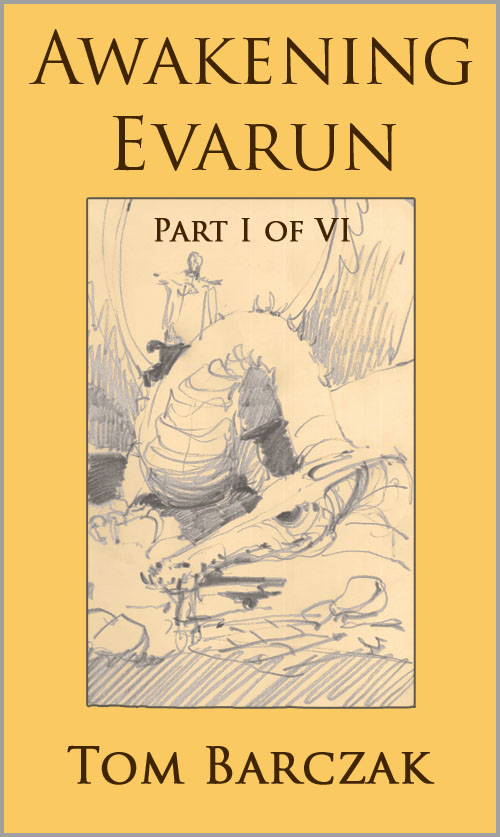
Awakening Evarun and the Appeal of Short Story Series


I recently had the honor of reading the first installment in Tom Barczak's new short story series, Awakening Evarun. If you've never heard of Tom Barczak, I can understand. Awakening Evarun is his first 'published' piece of work, but I found this debut piece of fantasy to be quite entertaining.

I had the opportunity to speak with Tom on the phone a while ago and we had a chat - author to author - about how we found the idea of short story series to be quite compelling. I think in this age of self-publishing, with authors having control over every aspect of their work, it's neat to think in terms outside just writing novels.

I've always been a huge fan of the Star Wars universe. Although I love the writing of most of the authors that are given the privilege to write books in the series, I have always been more enamored with the simple aspect of diversity. The Star Wars universe started with a group of main characters and has branched off into a whole universe of fictional goodies. Novellas, short stories, cookbooks, merchandise, novels, movies...the list goes on and on. It's easy to pick up a book and read it, understand what's going on, and want to dive into other parts of the universe.

This delightful appeal is one I have aimed for in my own series

I've had plans in the works for a couple years now to start an episodic short story series called the LZR Project. I have five or six drafts of episodes done already and am hoping to resurrect this project and start writing on it again this next year. I did the episode thing with my novella, Picture Perfect, before I combined the episodes into book format. I just like the idea of readers being able to bite off little chunks of a grander story here and there, weeks or months at a time. It's a nice diversion to keep my readers entertained while I continue to carve away at the novels, which take considerably more time and effort.

In that regard, when Tom told me he was wanting to try out this short story episode idea, I was excited. Especially considering he is also a talented artist who is illustrating parts of these stories.

Check out the first installment of Awakening Evarun if you get a chance. It's well worth the $2.99. Below is my review.

Awakening Evarun is a great start to what Tom plans on being a six-part short story series. The pace of the story is easy and intriguing, making it a quick read that feels satisfying, yet leaves you wanting more when you're finished. Tom's writing style is definitely a gift and I look forward to more from the author.

On top of that I have to praise the illustrations. It's not that often you come across an author who can also illustrate his stories with such great detail. It's also not that often you come across an illustrated story as this. What a treat. For the price, you get great artwork and an intriguing storyline. Tom Barczak is definitely an author to check out. 


Purchase Awakening Evarun on Amazon -  http://tinyurl.com/4x3th44
Tom's website - http://www.tombarczak.com 
Tom's blog - http://www.tombarczak.com/blog
 

Thursday, October 7, 2010

Battle Royale - (Book Review)


Battle Royale is a novel about a class of junior high school students who are dumped on an island by the government of the Republic of Greater East Asia - an alternate timeline Japan - and forced to kill each other. The winner gets credits and freedom while the losers, of course, die. To up the ante, each student is given a survival pack with miscellaneous supplies and a random weapon inside. Each student has a collar put around their neck which is said will explode if the students break certain rules, and there are time limits and forbidden zones that keep everyone moving around the island, forcing confrontations that might otherwise never happen.

The story itself is brilliant. Touted as being extremely controversial, especially for the time it was released, the book opens up all sorts of doors to conversations and thoughts about psychology, murder, survival, love, loyalty, and moral ground.  I enjoyed how the different characters were brought to the page - and there were a lot of them. It was fascinating to see the paranoia that the very situation sparked in most every student and the different reactions because of it. Some of the students refuse to kill, instead trying to take pacifist actions that most of the time ended up getting them killed. Others develop, or rather bring to the surface, the cold-blooded killer instincts that the game has given them an excuse to execute.

Merciless killing, gratuitous gore and themes of friendship, love and redemption come shining through the books otherwise grim and gratuitous themes. While most of the plot arcs were a bit predictable, there were some nice surprises along the way and I found myself quite surprised and happy with the ending. I found myself constantly stopping to question what I would do if placed in a similar situation. The book also gave me a bit of appreciation (not that I didn’t already have it) with the freedom that our great country gives us.

Some drawbacks to the book were constant grammar errors and typos. These might be attributed to the fact that the book was translated over from its original Japanese text, but there still should have been a better editing job done on it. Those mistakes weren’t enough to detract from the books overall feel, though I did have to stop at some points and try and figure out what was trying to be said. Some of the scenes in the novel required me to heavily suspend my  disbelief, with some of them even crossing the line and forcing me to wonder how so-and-so got out of a blaze of bullets unscathed.

Some of the ways these students hack-and-slash their way through the island they are trapped on makes me a little weary about how students of their age bracket (15+) get their killing motives, though that’s really where the psychology questions come in. The book is gory and blood-drenched, but honestly I became slightly numb to the descriptions by the end of the novel because a lot of them were either outrageous or just repeated too many times.

Overall, I would give this book a hearty 4½ out of 5 stars. It’s definitely worth the read. If you cringe at slash and hack, I would steer away from this since, as I mentioned before, it is a bit gory. There are touches of romance, and definitely some great moral themes to spark off in-depth conversations with others.

Wednesday, July 14, 2010

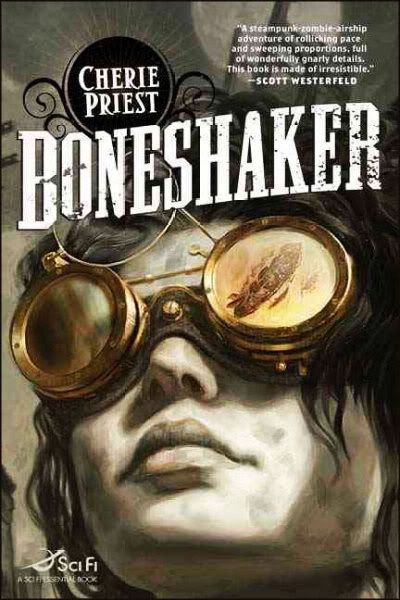
Boneshaker - (Book Review)


To start off, I'll state what I found great about this book: the cover, the sepia tone printing, the premise. Yeah, that's about it.

During the gold rush in the Klondike, a call for inventions is put out for a way to mine gold out of the ice. One particular scientist answers the call with a machine called the Boneshaker. But something goes horribly awry and several blocks of downtown Seattle are destroyed with the machine, releasing a nasty blight gas that turns people into the living dead. Sixteen years later, and Briar, the wife of the scientist who created the Boneshaker, is living with their son, Zeke. Zeke sets off to the walled off city of zombies to find the truth of his family's history and thus, Briar sets off after him.

Zombies? Steampunk? Alternate history? Even pirates? What an awesome combination - conceptually, anyways. I don't feel Cherie pulled it off though. For one, her writing seemed mostly dull and flat. There was an occasional line or two that cried out with a unique style that could very well be Cherie's voice, had she maybe honed it and used it for the majority of the book. But that's not really the case here. Her way of describing things just didn't work. I had a hard time imagining this alternate history, picturing what the blight infested city looked like, or even imagining these characters to be anything more than two dimensional because most of her description just felt hollow and sometimes confusing. I found myself having to reread passages to understand what it was she was saying.

The characters all fit the roles they were assigned to, though they all felt sub par. None of them captured my attention, nor did I find that I could relate to any of them or even find myself caring about what happened to them. Part of this might have been because I felt there were too many 'coincidences' in the book. Way too many times where 'fate' came together to pull the story through, where things lined up just at the right time to propel the story further or lead everyone to the places they were meant to go. I can suspend disbelief for a while, but this book left me not too concerned about the characters because I knew that if one of the characters was to fall into trouble, the author would just have a way written out for them to 'somehow' survive the situation. It led me fearing a bit of deus ex machina.

The most obvious indicator that a novel has my complete attention and interest is that I am anxious to get back to it, to pick up where I left off, to find out what the characters are going to get themselves into or out of next. This wasn't the case for me with Boneshaker. It just lacked...I don't really know. A spark, a pizazz. It felt like a melting pot for some unique genres that just didn't boil things down to a story that captivated me. I found myself skipping my reading sessions for days at a time because I really just didn't want to get back into the book. I finally just finished it so I could say I read it.

To me, even the ending seemed a bit anticlimactic and maybe a bit forced. However, I believe this is actually the first in a series, so hopefully the second one will spice things up a bit, if I want to bother picking it up.

Friday, May 7, 2010

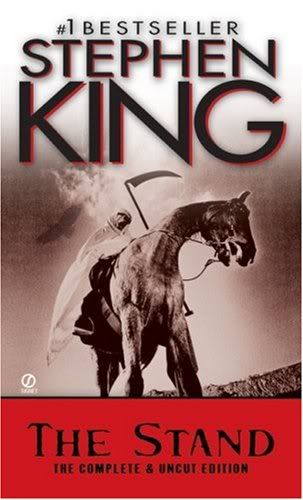
The Stand - (Book Review)


When I first picked up a copy of Stephen King’s, The Stand - The Complete and Uncut Edition, in my local Borders Book Store, I wasn’t exactly sure what I was in for. The book is more than an inch and a half thick and over 1100 pages long. I am still in the middle of Stephen King’s Dark Tower series and those books themselves are pretty long, especially Wizard and Glass. But those seem to pale in comparison to the scope that this one novel tries to cover.

The story was great despite its minor shortcomings. A super virus destroys most of mankind and what’s left are various survivors trying to pull themselves together in a world of emptiness and destruction. The apocalyptic terrain that King created in this book is absolutely amazing. The loneliness the characters felt was loneliness that I felt right along with them. Death is around every corner, the corpses of people hit by the virus hiding in dark houses, along littered highways wrought with steel coffins. They are everywhere, a continuous reminder that life is so incredibly fragile.

The book is separated into three parts. The first part seems to be completely designed to introduce most if not all of the characters and their dreams - either of ‘the Dark Man,’ Randall Flagg, who is calling those with an impure heart to Las Vegas - or of Mother Abigail, a 108 year old black woman, who is calling those of a good heart to an old shack in Nebraska. The second part of the book describes the set up of Vegas and of Boulder, Colorado - the location that Mother Abigail moves her people to. Most of this section is about Mother Abigail’s group and how they enforce law and set up a committee and various other establishments that fell during the apocalyptic outbreak. The third part is the final stand off between good and evil, between the main characters from Mother Abigail’s group and Randall Flagg’s group.

There are so many characters in the story that I’m not going to bother listing them. My favorite was Nick Andros, the deaf mute. The characters were real, they were creative, and they were brilliantly brought forth on the pages of the book. Even when a character was only in the book for a page or two, they felt so incredibly dynamic. The reactions that each character has to the world that is falling apart around them was right on and I could tell that King put some time and energy into making sure of that.

What I love about Stephen King’s writing as I read more of his books is the way he ties in characters from one series into another. Randall Flagg is also the main protagonist in the Dark Tower series and I think he is one of the best villains I have read. He is the embodiment of pure evil, the very core of what is wrong with the world. That being said, I was a bit disappointed with the ending of the book. It felt very anticlimactic. When I expected a final showdown between the characters and one of the darkest beings the world has ever seen, I was bummed at how Randall Flagg was actually taken out of the picture. On top of that, some of the epilogue-style ending chapters seemed to serve no real purpose. I do agree that King should have had the basis of those chapters in the novel in some capacity, seeing how the reader ends up investing so much time into the book, but I think he could have done without some of the long, drawn out scenes he used.

This leads me to the biggest complaint I have about the novel: King has too much exposition in some parts of the book. I understand that uncut means uncut, but I’ve noticed the same thing about King in some of the Dark Tower books as well. There’s just too much description about things that don’t really progress the novel or carry the storyline further ahead.

Another complaint I have about the book is the uneven scenes. I would read very long chapters about one particular character only to get to the next chapter about another character and find the story has backtracked to run parallel with the chapter before it. This made me have to stop and figure out where I was exactly - chronologically speaking - in the book. I think the chapters could have been leveled out a little more evenly and the pace tuned up a bit.

All in all, The Stand is phenomenal and a definite must-read before dying. Put it on your bucket list. Just don’t purchase the uncut edition in paperback if you get headaches easily. The version I purchased from my local Borders had an extremely small font which only allowed me to read it in intervals. I probably would have been better off buying the eBook version and reading it on my computer.

I give the book four and a half stars out of five.

Wednesday, March 17, 2010

Odd Thomas - (Book Review)


Lately I have been trying to read work from authors I have either not read from yet or haven’t read from in a while. Odd Thomas is actually the first book I have read of Dean Koontz’s and I’ll admit, this book made me a fan of his practically overnight.

Odd Thomas is the story of a young man, Odd Thomas, who can see dead people. Some come to him and request him to help them pass from this world to the next and some just can’t let go, like Elvis who befriends Odd and rides with him around town. But there’s more than just the dead walking around Pico Mundo, the California town where Odd resides and works as a short-order cook at the Pico Mundo Grille. There are creatures called bodachs (a name that Odd chooses to call them by) that resemble black mass silhouettes whose presence usually foretells of some impending chaos or disaster.

The book opens with Odd being called to bring to justice a man who raped and murdered a young girl. After that, Odd goes to his job at the Pico Mundo Grille and notices bodachs hanging around a man with a creepy smiling disorder. Following the man brings Odd into a tumultuous supernatural storm that forever changes his life and the lives of those close to him.

The book is written from Odd’s point of view in first person narrative and is told as a memoir of sorts of Odd’s adventures during a span of a couple of days. There is humor in the book and yet it has a dark, moody sort of feel to it that really lends itself to the atmosphere surrounding the dead and possibly dying that Odd encounters. I loved Odd’s inner thoughts and his dialogue. Both were very well written and I found myself laughing out loud on more than one occasion.

Odd Thomas is a rich story made richer with the character of Stormy Llewellyn, Odd’s love interest. According to a fortune that was given to them both by a gypsy mummy at a carnival, they are destined to be together forever. She is the perfect counterbalance to Odd’s unpredictable and somewhat questionable behavior and lends some sunshine to the bits of gloominess that surround Odd’s destined career.

I think this book can act as a wonderful catalyst to stir up questions about religion and the afterlife. There is brief mention of reincarnation and the majority of the book hinges on the belief that the dead have the choice whether to move on from our life to the afterlife. The book doesn’t shove any of these beliefs down your throat, simply presents them as character traits and leaves the subjects open for discussion or deeper thought.

After reading this book, which I did at the referral of my brother, I was pleasantly surprised to find that there are at least three others that were written with Odd Thomas: Forever Odd, Brother Odd and Odd Hours. These will indeed be read and reviewed as well. Odd Thomas was a pleasant surprise to read in the midst of the heavy Stephen King novels I am venturing through: Wizard and Glass and The Stand.

Wednesday, March 10, 2010

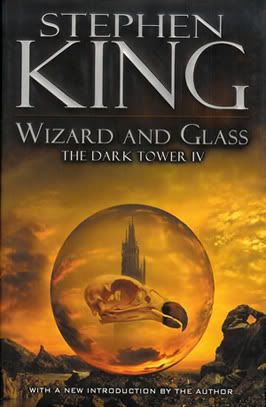
Wizard and Glass - The Dark Tower 4 (Book Review)


When I first picked up this installment in Stephen King’s wildly popular Dark Tower series, I wasn’t sure what to expect. I had read a few brief reviews on it and was dismayed to find that a decent number of people found this book completely pointless to the series as a whole. Some said the book could be skipped altogether if not for some key elements of plot that take place in the beginning and in the end of it. The main reason for this is because the book is essentially a giant flashback, a telling of Roland of Gilead’s days of youth and how he came to his decision to pursue the Dark Tower.

As Roland and his current group of friends, or ka-tet, spend the night on an abandoned turnpike in Kansas, he tells them the story of his one and only love, Susan Delgado, of his old enemies, the Big Coffin Hunters, and his escapades in Mejis, the barony that he and his friends were sent away to in an attempt to keep them out of trouble after Roland witnessed his mother being seduced by Roland’s arch nemesis, Marten the sorcerer. The tale fills in much of Roland’s past from the time he is announced a true gunslinger to the point where he decides to pursue the Dark Tower over everything else.

This story is as much a romance as it is an adventure. As much a horror as it is a character driven masterpiece. I have never become so absorbed in a novel as I did when reading Wizard and Glass. In the three books leading up to Wizard and Glass, I got to know Roland of Gilead – a little – but I knew there was more to Roland’s past than what was being revealed. His one true love, Susan Delgado, for example is mentioned in the tales leading up to Wizard and Glass, but nothing could have prepared me for the fate that actually encompassed her character.

And that is the strong point of King’s masterpiece – character. Personally, I love character driven stories over plot driven stories. This is both. Roland’s character comes off the page in vibrant colors. His bright blue bombardier eyes stare out at you in every page that is turned and you know that tragedy will befall him but you hold onto a strand of hope that perhaps things really will work out for him in some small way. I found myself skipping ahead to different chapters to catch of glimpse of what was going to happen because the book had me on pins and needles with the tension it delivered. I wanted to know if Roland would best the Big Coffin Hunters, if he would solve the mystery of the Drop and the Wizard’s Glass, if he and his friends would manage to thwart The Good Man’s sinister plans. Most importantly I wanted to know what was to happen to Susan Delgado. She was a character that I easily fell in love with and it was difficult to put the book down at times unless I knew she was in a safe spot out of harms way.

King is a master of his craft. There is no doubt about that. The only complaint I think I have of Wizard and Glass is that some of the earlier flashback scenes are a bit slow and I found I had to trudge through them to get to the meat and potatoes of the book. I felt the book could have been cut a little bit shorter than it was, but at the same time these scenes are few.

I highly recommend Wizard and Glass to anyone that has read the first three books of the Dark Tower series. As much as it is a flashback, I would suggest readers pick up the first three books to acquaint themselves with the main characters that are presented before and after the flashback, and so readers will understand why Roland and his group are riding a demonic train in the beginning of the novel, one they are struggling to tell riddles to in order to be let off the cursed thing.

The book in all its strangeness, in all its romance, in all its horror and science fiction/fantasy, is on my list of all time favorites, as is the Dark Tower series as a whole. After reading the first three books about a year ago, this one only renewed my desire to read the complete series and any of King’s other works which tie into it, which are surprising and many.

Thursday, February 18, 2010

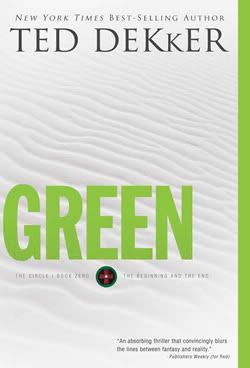
Green (Book Review)


So, when I finished White - Ted Dekker's third book in the Circle trilogy - back about a year ago, I figured Dekker was done with the circle trilogy altogether. He seemed to wrap things up nicely, not really giving any cause to start another book. Then came Green, the fourth book in the Circle series.


Referred to as Book Zero, Green is advertised as being able to be read either as an introduction for new readers of the circle trilogy or as a nice continuation for those that already read the first three books. In essence, the series is a full circle. Quite extraordinary...in concept.


Before I go any further, I would like to state that I have nothing against Green as a story. It was superbly written, as Dekker's other Circle books are, and kept me captivated to the very end. However, I strongly feel this is the wrong book to start out the Circle series with. Anybody who hasn't read Black, Red or White should go back and read them - in that order -  and then pick up a copy of Green. I assure you, it will make a whole lot more sense than if you pick up Green and try to get into Dekker's world.


Saying that, I admit there are spoilers ahead. You've been warned.


***SPOILERS***

My brief synopsis of the circle series goes like this: A deadly virus is spread in our world, threatening to kill off the world's population. Thomas Hunter, after being shot in the head one night, begins to dream/travel of another world, our world, but 2,000 years into the future. A world after the Apocalypse has already taken place. A world where God (known in the series as Elyon) has started things over so to say. But evil still resides in the form of a strange bat-like creature known as Teeleh. Teeleh poisons the minds of Elyon's followers, casting them into the desert. The series goes from there into the dynamic relationships between those that have a scabbing disease, known as the Horde, to those that have decided to drown in Elyon's waters - waters that cure the scabbing disease. These are known as albinos. There are also those that have drowned, then turned Horde and then fled into the forests, taking the name of Eramites.

The tension between those that aren't Horde and those that are mounts up in Green, setting the stage for a well-laid Christian allegorical layout. Thomas, by the time Green starts, is trapped in the future world, now the leader of those who have chosen to drown. Many are getting tired waiting - many years have passed since White - for Elyon to fulfill His promise and return to claim the albino as His bride. Bickering and complaining abound while Thomas and his wife, Chelise, once Horde herself, try to keep everyone on track to loving the Horde, avoiding bloodshed. It is Thomas' son, Samuel, who decides to stand up and move everyone to pick up arms to kill the Horde, convincing those that would listen to him that Elyon isn't ever coming back for them and that the time for hiding from the Horde is over with.

These matters escalate when Thomas finds the Books of History that allow him to go back in time, to our world again. Thomas manages to change history as a war between Horde and albino and Eramites begins, facilitated by Teeleh, the source of all evil. Another epic battle between good and evil commences, told in spectacular fashion.

What Dekker began in Black, continued in Red, and ended in White, he only made better in Green. The characters in Green are all older and some have moved on in their lives. It seems that Dekker raised the bar of emotional strife and struggle in this book and even deepened the series' portrayal of faith. The book seems a bit gorier and even a bit more sensual in some areas. Most of it adds to the story though. And I'm glad to see that a book that falls under the Christian Fiction category has taken a few liberties with worldly viewpoints. I’m not saying we have to litter a Christian fiction book with sex and violence, but too many times nowadays I see Christian authors shy away from taking things to an edgy level that might bring about the contrasts of good and evil in a much more profound way instead of sugar-coating everything so it’s easy to swallow.  Bottom line: Dekker doesn’t really pull many punches, which pays off for making a great series.

Dekker, as always, does bring about strong values through the story. Faith, friendship, sacrifice and love all play an important part. As does the worship of Elyon. The book doesn't sound preachy and really did a good job of telling a story instead of preaching a sermon. That's what I've always loved about Dekker...well, from what I've read from him, which at the moment is only the Circle series.

Another unique thing about the Circle series is that apparently characters and plot elements from the entire series leak into Dekker's other books, like the Paradise series and the Lost Books. I have yet to check those out but they will definitely be on my list in the coming months.

Now come my ponderings and issues with Green.

By the end of the book, which loops into the beginning of Black, I had a slightly confused mind as to why the book loops to begin with. At the end of Green, before Thomas is sent back to our world by Elyon, he requests Elyon to save his son, Samuel, who ends up dying at the hands of his mother's father, Qurong, the leader of the Horde army. Elyon grants his request, sending him back, but I'm not sure how that resolves how Samuel could be saved. I see how it could give Thomas another chance at saving Samuel because he is starting things - the series - all over again, but he has no memory of what happened before he was sent back, meaning he would more than likely follow the same path that he did the first time around, still resulting in his son's death.

My overall feeling on Green is that it is a great book, especially if you have already read the first three in this series. Ted Dekker's writing style in the Circle trilogy lives on in Green, however fans may find that Green is a bit more violent than the three books prior. The novel goes into great detail to chronicle the blood sacrifices that Teeleh demands and it doesn't shy away from a gore factor. The book even makes connections to vampirism, which I’ll admit threw me off a little. I understand the connections that Dekker makes to vampires, but didn’t understand why he made those connections in a book like this.

I also found that Green seems to be aspiring to a lofty goal trying to bring readers who haven’t read the three books prior up to speed on what is going on in the entire series. It does an okay job of glazing over the more dominating plots, but I fear that readers new to the series are going to be more confused than drawn in by reading Green first. This book is more of an ending that wraps into the beginning, not a starting point so to say.

I think in the coming months I am going to sit down and read Black, Red and White once again. Then I’ll pick up the Lost Books and the Paradise series and see how everything really ties together. I’m hoping Dekker comes out with another book that maybe explains how things loop, but until then, I’ll cough this up to a great series that is definitely worth reading. In order.

Official website of Ted Dekker

Thursday, January 28, 2010

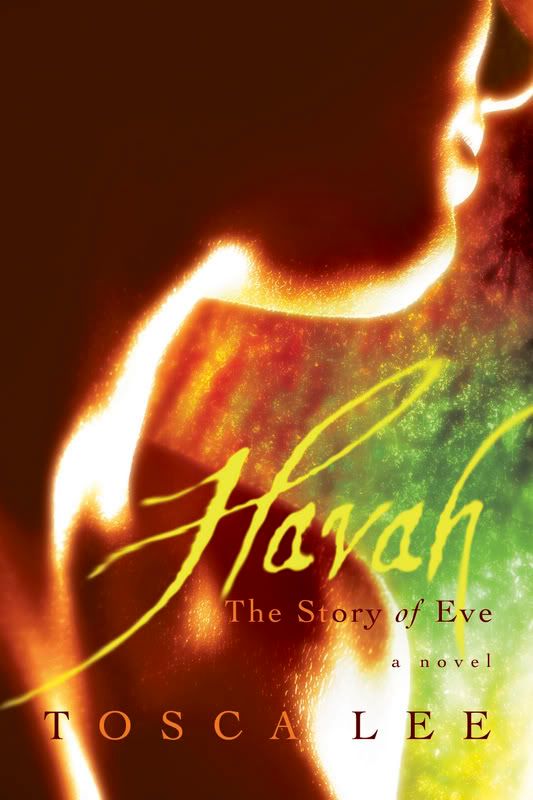
Havah: The Story of Eve (Book Review)


To start off, I think I'll sum things up easily by stating this: Havah took my breath away. If that sounds a bit romantic, it's because I meant it to. Not the clique kind of romantic, but the awe-inspiring, fearful romance between a creation and its creator. Havah is a beautiful novel written about God's love, His desire for a relationship with His Creation, and the agony of our relationship with Him being broken because of our own disobedience.

The story begins with Eve being created from Adam. Written in first person, the novel does a beautiful job of portraying Eve as she is birthed into existence. I'm not sure how challenging it must have been for Tosca to write from this angle, but she most definitely did an excellent job and it is this simple fact alone that marks her as a truly talented writer.

Eve runs through the garden in fellowship with the One, falls in love with the creation that came before her, Adam, and lives in wonder at the very world that God created for the two of them. Adam and Eve are able to communicate with each other, with the wildlife, and with God without speaking, the thoughts of all understood clearly, without deception or misunderstanding. The world at this time is truly one of bliss. No sin. No violence. Nothing but love and fellowship with each other and the One.

It broke my heart while I was reading these parts because I knew what was coming next in the story. I knew that they were going to rebel against God's direct orders and that the fellowship with God was going to be broken. Eve and Adam partake in the fruit that the serpent - beautifully illustrated as an intelligent and sly creature - gives them and fall into death. What was once a beautiful garden now becomes a wild place that teems with violence and brutality, chasing Adam and Eve out of the paradise that God created specifically for them.

The story is then propelled into Adam and Eve's relationship with each other, which takes a rough turn after their banishment from the garden and with the hostility of the land and the wildlife they have now been thrust into. They have children, and the story goes on to explain the heartaches of the garden they left behind, the children that are now populating the earth and the chronic pitfalls they encounter with the cursed land. The story expands into Cain and Abel, referenced in the novel as Kayin and Hevel, and the birth of murder.

Tosca really put her heart and soul into this novel. The Bible only explains so much about Adam and Eve's banishment from the Garden of Eden and how the world is populated, but Tosca put so much fine effort into filling in the gaps in her own speculative way. I have to say this was truly a story that broke my heart at times and took my breath away at others. I was able to relate to Adam and Eve in a manner of existence, knowing that they were the ones that all life was created from, knowing that God had so much more in mind for them and for us. Their struggles are really no different than the struggles we encounter nowadays: murder, anger, greed, idolatry and lust.

During the novel, the expanse that looms between Adam and Eve as they succumb to their new destiny parallels the expanse that clearly grew between God and us when these events occurred. The silence, the embarrassment and shame of sin, stains the pages of the novel as it does the very core of our own hearts and I couldn't help but feel a sense of fear at some points...fear of what would have happened if God hadn't eventually sent His son to save us from an eternity of misery and broken fellowship with Him.

I am proud to give this book my own set of five stars. Granted, I usually enjoy reading a good science fiction/fantasy or action novel, but Tosca really pulled on my heart strings and, in her own style, drew me closer to realizing God's true character and what He always wanted for us. This is the perfect book for a Bible study group or book club.

I look forward to reading and reviewing another one of Tosca's novels, Demon: A Memoir, in the coming months.

To find out more about Havah: The Story of Eve check out http://www.havahstoryofeve.com
For more on Tosca Lee, check out her official website at http://www.toscalee.com